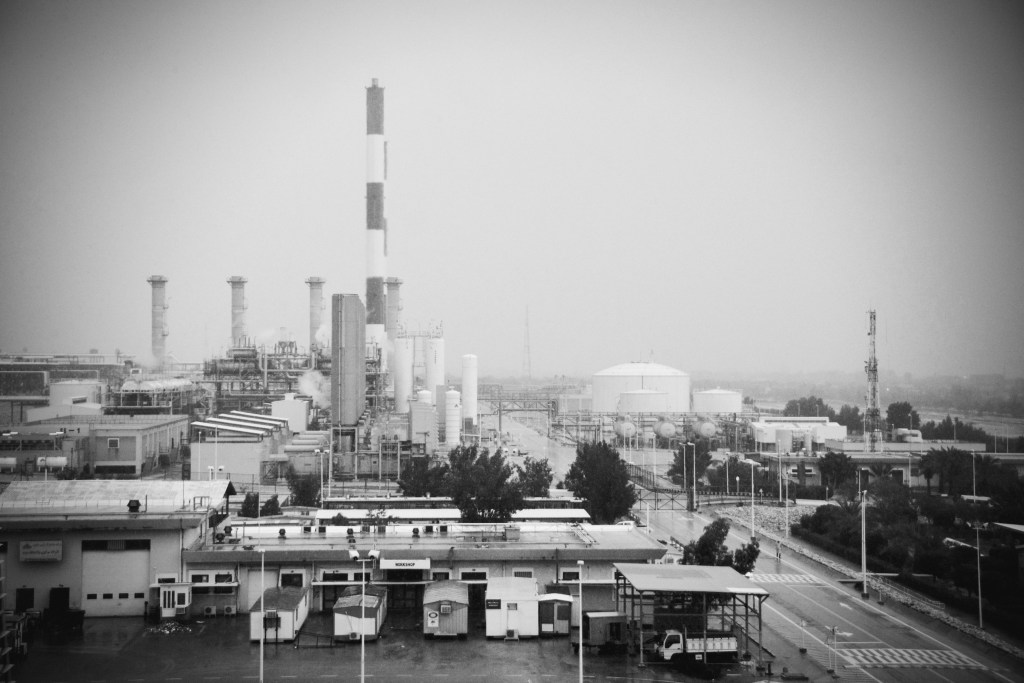
Iran has been a key player in the global oil and gas market for more than a century.
Iran holds the fourth-largest oil reserves and the second-largest gas reserves in the world. Its oil reserves account for more than 10% of global oil reserves (estimated at 157 billion barrels), ranking just after Venezuela, Saudi Arabia, and Canada. Despite these massive reserves, Iran is only the 9th-largest oil producer, mainly due to years of heavy economic sanctions and the resulting lack of foreign investment and technology transfer.
Iran currently produces around 4 million barrels of oil per day (bpd), out of which it exports about 1.5 million bpd. Over 90% of its oil exports go to China, with the rest heading to other Asian countries through grey markets—and often at heavily discounted prices due to international sanctions. In fact, Iran supplies roughly 10% of China’s oil imports, which makes it more significant to global markets than many realize. The estimate revenue from oil was 67 billion in 2024, marking a decade long peak despite export sanctions. However, because of the discounts and costs involved in bypassing sanctions, Iran’s actual per-barrel earnings are 30–50% lower than global benchmarks.
All of Iran’s oil exports go through Kharg Island, located in the south of the country, just northwest of the Strait of Hormuz. This strait is one of the most strategic maritime passages in the world. It’s a narrow chokepoint between Iran and Oman, and more than a third of all global seaborne oil passes through it. That’s why any conflict in the region tends to have immediate effects on global shipping and oil prices.
Iran’s oil story began back in 1908 with the discovery of oil in Masjed Soleiman, making it the first country in the Middle East to develop an oil industry. This discovery led to the creation of the Anglo-Persian Oil Company (which eventually became BP), and over the following decades, Iran’s oil sector became a major player in global energy markets. In the 1970s, just before the Islamic Revolution, Iran was producing more than 6 million barrels of oil per day and exporting to over 30 countries—some through the Iranian Oil Consortium (formed in 1954), which included BP, Shell, Exxon, Mobil, Chevron, and others.
Iran was also one of the founding members of OPEC, established in 1960 alongside Saudi Arabia, Iraq, Kuwait, and Venezuela. The organization was formed to give oil-producing countries more control over pricing and production, at a time when Western oil companies held most of the power.
As for natural gas, Iran holds the second-largest reserves in the world (about 1,200 trillion cubic feet), just behind Russia. However, many of these reserves remain underdeveloped, again due to sanctions and limited investment. Iran shares the world’s largest gas field with Qatar—the South Pars/North Dome field —but uses 95% of its natural gas domestically, with only limited volumes going to export.
Sources:
- https://www.aljazeera.com/news/2025/6/17/mapping-irans-oil-and-gas-sites-and-those-attacked-by-israel
- https://www.worldometers.info/oil/oil-reserves-by-country/
- https://www.nasdaq.com/articles/10-top-oil-producing-countries-updated-2024?utm_source=chatgpt.com
- https://www.statista.com/chart/14456/iranian-crude-oil-exports-by-destination/?utm_source=chatgpt.com
- https://www.iea.org/
- https://www.oxfordenergy.org/wpcms/wp-content/uploads/2018/04/Progress-challenges-uncertainty-ambivalent-times-for-Iran%E2%80%99s-energy-sector-Insight-34.pdf



 Energy and Environment Blog
Leave a comment